

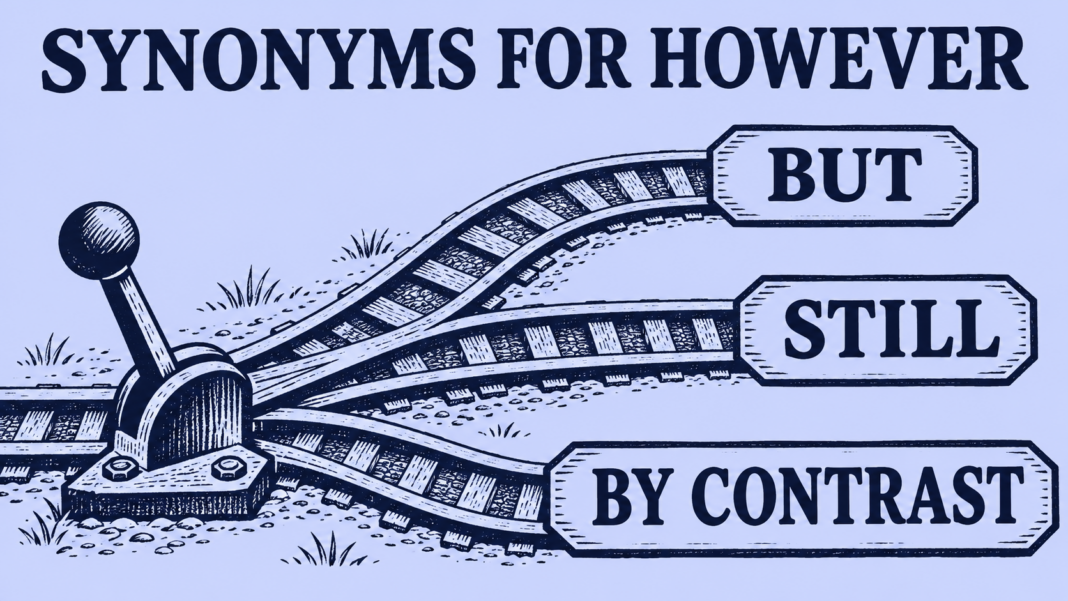
But is the simplest substitute for however when two ideas contrast. Still or nevertheless works better when something happens despite a problem. Choose by contrast to compare two things directly. If however means no matter how, as in however hard you try, those contrast words will change the meaning.
Choose the Relationship Before the Word
Take the sentence The room was small. However, the acoustics were excellent. You could join the ideas with but or use still in the second sentence. Both versions work, but they put the emphasis in different places. But lets the two facts sit side by side. Still gives the good acoustics a little more weight, as if you expected the room to disappoint.
Make a contrast with but or yet. Show that something went ahead despite a problem with still, even so or nevertheless. Compare two options with by contrast or whereas. Introduce a fact that softens a point with that said.
Sometimes you can make the contrast clearer by putting the two ideas next to each other. The desk seats one person. The shared table seats six. The numbers do enough work on their own. If those sentences appear far apart in a report, a phrase like by contrast can help the reader see which earlier point you mean.
But and Yet Keep Sentences Moving
But suits everyday messages, directions and reports. Instead of writing The first design is cheaper. However, the second one is easier to repair, try The first design is cheaper, but the second one is easier to repair. The shorter transition brings the trade-off into one sentence. In a work email, that can make your recommendation easier to follow.
Yet makes the contrast sound a bit more surprising. The pilot episode runs for an hour, yet it feels short. The word puts a small spotlight on the mismatch between the episode’s length and how it feels. As a transition, yet differs from the time sense you hear in The episode hasn’t aired yet.
Still and Even So Acknowledge Obstacles
Still is useful when the first fact might have changed the outcome. The garden flooded in April. Still, the tomatoes made it through the spring. You can also move still into the second clause: The tomatoes still made it through the spring. That version sounds natural in conversation. Putting it at the start makes the relationship to the previous sentence clearer.
Even so gives that unexpected result its own beat. The library had no heat. Even so, everyone stayed to finish the workshop. Nevertheless and nonetheless work in much the same way, especially in more formal prose. In a project update you might write The grant covered less than we expected. Nevertheless, we met the original deadline. The word ties the deadline back to the funding problem.
That said is better when you want to qualify your own point. The smaller room will cost less. That said, we may need the extra seats. You still stand by the first statement. The second adds a reason to think twice before acting on it. On the other hand can do a similar job when you present two sides of a choice.
Compare Options With By Contrast
By contrast draws attention to a difference between two things. The downtown branch closes at five. By contrast, the airport branch stays open until midnight. It works best when the sentences compare the same feature, such as hours, price or distance. In a schedule update, the same kind of precision helps when you distinguish a deadline from a time frame or delivery window.
Whereas puts that difference inside a single sentence. The old system sends a reminder by mail, whereas the new one sends a text. This works even when neither fact is surprising. Choose on the contrary only when the next statement contradicts or corrects an idea. The move didn’t save us time. On the contrary, it added twenty minutes to the trip.
Punctuation Changes With the Substitute
However, nevertheless and by contrast can introduce a new sentence. Use a comma after the transition in that position. The quote includes delivery. However, installation costs extra. You can also put the contrast in one sentence with but. The quote includes delivery, but installation costs extra. A comma alone cannot connect two complete statements with however. See Purdue OWL’s punctuation guide for the difference between the two constructions.
A transition can also sit inside a clause. The second quote, however, includes installation. In that position, the commas mark a brief interruption. Moving but into the same position does not work. Put it before the clause instead, or keep the transition that fits where you placed it.
Although lets you lead with the fact you want readers to weigh before they reach your main point. Compare The studio is across town. However, I can get there on one bus with Although the studio is across town, I can get there on one bus. The second version makes the distance background information and ends on the practical detail. If you reverse the clauses, I can get there on one bus although the studio is across town still makes sense, but the sentence ends by reminding the reader of the distance.
When However Means No Matter How
In However carefully you pack the glasses, one may still break, however carefully means no matter how carefully. There is no comma between however and carefully. The comma belongs after the whole introductory clause. In Arrange the chairs however you like, the word means in whatever way. The Merriam-Webster entry for however lists these uses separately from the contrast sense.
You may also see however add emphasis to a question, as in However did you find that receipt? In everyday American English, How on earth did you find that receipt? has a similar effect. If the word you want is a casual way to return to a subject, anyway may fit better. Anyway, back to the receipt changes the subject back. However would tell the reader to expect a contrast.
